



- By Cornell Music
- Entertainment
 Print
Print 

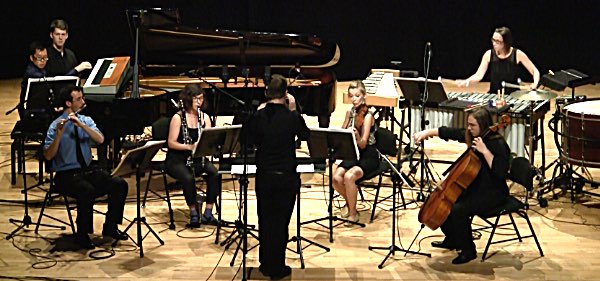
The two-day festival "Forbidden Songs" explores the fraught artistic and personal decisions confronted by the Polish composer Roman Palester (1907–1989). Highlights include the world premiere of the film Forbidden Songs (1947) in English and U.S. premieres of Palester's chamber music and vocal works performed by Ensemble X.
Forbidden Songs was the first feature film released in Poland after WWII. Conceived and written by Ludwik Starski, a Polish-Jewish survivor of the Holocaust, the film remarkably adopted the genre of light musical comedy to portray the diverse experiences of Warsaw's inhabitants during the period of Nazi occupation (1939–1945). The film's score, created by Palester, draws heavily on authentic popular sources, notably satirical Polish "street songs" banned by the Nazis but nonetheless performed as expressions of resistance and a means of psychological sustenance during this time of deprivation and terror.
 In 1983, at age 81, Barbara McClintock won the Nobel Prize for her work on plant genetics—work that has turned out to be essential to today's genetic research. Some have made her into a feminist icon, a misunderstood woman scientist ahead of her time. Others say it was her own eccentricities that held her back. Who was she really? It's not something read in a paper or proved in a lab.




 Praised by The New York Times as a “singer with a strong and lustrous tone and an amiably regal presence on stage,” Alicia Olatuja has been astounding audiences with her exquisite vocals, artistic versatility and captivating demeanor. She first came into the national spotlight in 2013, performing as the featured soloist with the Brooklyn Tabernacle Choir at President Barack Obama’s Second Inauguration. Shortly thereafter, she assembled her own jazz-based ensemble and recorded her first solo album, "Timeless" (2014). More recently, she sang on Gregory Porter's "Take Me to the Alley," winner of the 2017 Grammy Award for Best Jazz Vocal Album.